Hearing plays a vital role in communication, learning, social interaction, and overall quality of life. While hearing aids can help many individuals with hearing impairment, some people with severe to profound hearing loss may receive limited benefit from conventional hearing devices.
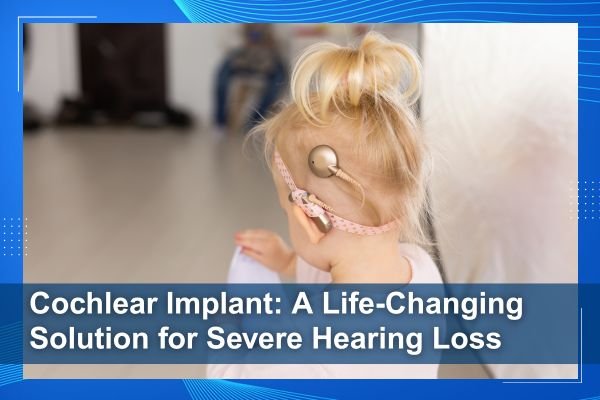
For such individuals, a Cochlear Implant can be a life-changing treatment option. Unlike hearing aids that amplify sound, cochlear implants bypass damaged parts of the inner ear and directly stimulate the hearing nerve, helping individuals perceive sound more effectively.
Under the expert care of Dr. Arindam Das, patients receive comprehensive hearing assessment, cochlear implant evaluation, advanced surgical care, and long-term rehabilitation support to achieve the best possible hearing outcomes.
What is the Condition?
A cochlear implant is an advanced electronic medical device designed for individuals with severe to profound sensorineural hearing loss who receive limited benefit from hearing aids.
Understanding Sensorineural Hearing Loss
The inner ear (cochlea) contains tiny sensory hair cells that convert sound waves into electrical signals for the brain.
When these hair cells become damaged due to:
- Congenital hearing loss
- Genetic disorders
- Aging
- Severe infections
- Noise-induced hearing loss
- Ototoxic medications
hearing may be significantly impaired.
A cochlear implant bypasses these damaged hair cells and directly stimulates the auditory nerve.
Components of a Cochlear Implant
External Component
- Microphone
- Speech processor
- Transmitter
Internal Component
- Receiver-stimulator
- Electrode array placed within the cochlea
Together, these components help convert sound into electrical signals that the brain interprets as hearing.
When Should You Seek Treatment?
You should consider a cochlear implant evaluation if hearing difficulties are affecting communication and daily life despite using hearing aids.
Common Signs That May Indicate Eligibility
- Severe hearing loss
- Difficulty understanding speech
- Limited benefit from hearing aids
- Frequently asking people to repeat themselves
- Difficulty hearing conversations in noisy environments
- Delayed speech development in children
- Inability to hear telephone conversations clearly
Children May Need Evaluation If They Have
- Delayed speech and language development
- Poor response to sounds
- Difficulty learning spoken language
- Congenital hearing loss
Adults May Benefit If They Experience
- Progressive hearing loss
- Significant communication difficulties
- Reduced hearing aid effectiveness
Early intervention often leads to better outcomes, particularly in children.
Why This Treatment is Recommended?
Benefits of Cochlear Implant Surgery
Improved Hearing Ability
Helps patients detect and understand sounds more effectively.
Better Speech Understanding
Many recipients experience significant improvement in speech perception.
Enhanced Communication
Improves interactions with family, friends, and colleagues.
Improved Quality of Life
Greater independence and participation in social activities.
Language Development in Children
Early implantation can significantly support speech and language acquisition.
Long-Term Hearing Rehabilitation
Provides ongoing access to sound and communication opportunities.
Treatment Process
Hearing Assessment
Comprehensive audiological testing.
Cochlear Implant Evaluation
Determining whether the patient is an appropriate candidate.
Surgical Implantation
Placement of the internal implant under general anesthesia.
Device Activation
Usually performed several weeks after surgery.
Auditory Rehabilitation
Speech and hearing therapy help optimize outcomes.
Risks and Complications
Cochlear implant surgery is generally safe, but as with any surgical procedure, certain risks may occur.
Potential Risks
- Infection
- Bleeding
- Dizziness
- Temporary balance disturbances
- Tinnitus
- Facial nerve injury (rare)
- Device malfunction (rare)
- Risks associated with anesthesia
Important Consideration
Successful outcomes depend not only on surgery but also on:
- Appropriate candidate selection
- Device programming
- Consistent rehabilitation
- Family support
- Regular follow-up
Frequently Asked Questions (FAQ)
What is the difference between a hearing aid and a cochlear implant?
Hearing aids amplify sounds, whereas cochlear implants directly stimulate the hearing nerve when the inner ear is severely damaged.
Who is a candidate for a cochlear implant?
Individuals with severe to profound sensorineural hearing loss who receive limited benefit from hearing aids may be candidates.
Is cochlear implant surgery safe?
Yes. Cochlear implantation is a well-established and widely performed procedure with high success rates.
At what age can a child receive a cochlear implant?
Children can be evaluated and implanted at a young age depending on hearing loss severity and medical suitability.
Will hearing return to normal after implantation?
A cochlear implant does not restore natural hearing but can significantly improve the ability to hear and understand sounds.
How long does the surgery take?
The procedure typically takes a few hours and is performed under general anesthesia.
Is rehabilitation necessary after surgery?
Yes. Hearing rehabilitation and speech therapy are critical for achieving the best results.
Can adults benefit from cochlear implants?
Absolutely. Many adults with severe hearing loss experience substantial improvements in communication and quality of life.
About Dr. Arindam Das
Dr. Arindam Das
MS (ENT)
Consultant Otologist & Cochlear Implant Surgeon
Dr. Arindam Das specializes in advanced ear surgery, cochlear implantation, hearing restoration procedures, middle ear surgery, and comprehensive management of hearing disorders. With expertise in modern otology and auditory rehabilitation, he is dedicated to helping children and adults overcome hearing loss and reconnect with the world of sound.
Call to Action (CTA)
Severe hearing loss does not have to limit communication, learning, or quality of life. Modern cochlear implant technology has transformed the lives of countless children and adults worldwide.
Schedule a consultation with Dr. Arindam Das today for a comprehensive hearing assessment and cochlear implant evaluation. Early intervention can open the door to improved hearing, communication, and a better future.