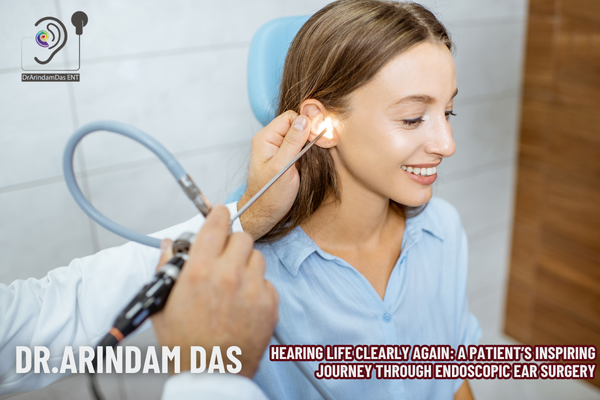
Hearing Life Clearly Again: A Patient’s Inspiring Journey Through Endoscopic Ear Surgery
When an Ear Problem Refused to Heal At 35, Mrs. Ritu Sharma had lived with recurring ear infections since childhood. For years, she experienced intermittent ear discharge, reduced hearing, and occasional ear pain. She managed the symptoms with medications whenever they became severe. But gradually, her hearing worsened. She found it difficult to follow conversations in meetings. Family members often had to repeat themselves. The constant fear of another ear infection affected her confidence and social life. When she finally decided to seek specialized care, she consulted Dr. Arindam Das, an experienced Consultant Otologist & Cochlear Implant Surgeon, known for his expertise in Endoscopic Ear Surgery and advanced ear care. That consultation became the first step toward restoring her hearing and confidence. Understanding Endoscopic Ear Surgery Dr. Das carefully explained the condition and the available treatment options. What is Endoscopic Ear Surgery? Endoscopic Ear Surgery is a modern, minimally invasive surgical technique that uses a high-definition endoscope to visualize and treat various diseases of the ear through the ear canal, often reducing the need for larger external incisions. Depending on the patient’s condition, endoscopic ear surgery may be used to manage: The exact surgical approach depends on the patient’s diagnosis and clinical evaluation. Common Symptoms That May Require Specialist Evaluation Patients with chronic ear disease may experience: Persistent ear symptoms should always be evaluated by an ear specialist. Causes and Risk Factors Several conditions may contribute to chronic ear disease: Early diagnosis helps prevent complications and preserve hearing. The Emotional Impact of Hearing Loss For Ritu, hearing loss affected more than just her ears. She experienced: Dr. Das reassured her that many chronic ear conditions can be successfully treated with advanced microscopic or endoscopic techniques, depending on the diagnosis. His patient-centered approach helped her feel reassured and informed. Comprehensive Ear Care with Dr. Arindam Das Dr. Das believes that every patient deserves a thorough diagnosis before treatment. His comprehensive approach includes: Each treatment plan is tailored according to the patient’s condition, hearing status, and long-term goals. Ritu’s Personalized Treatment Journey Following detailed evaluation, Dr. Das recommended Endoscopic Ear Surgery. Her Care Included: The objective was to eliminate infection, repair the damaged ear structures when appropriate, preserve hearing, and improve her overall quality of life. Benefits of Endoscopic Ear Surgery For carefully selected patients, Endoscopic Ear Surgery may offer several advantages. Potential Benefits Include: The benefits depend on the underlying ear condition and the type of surgery performed. Recovery Journey: Hearing the World Again Following surgery, Ritu carefully followed every postoperative instruction. Over the next few weeks, she noticed significant improvement. Her ear discharge stopped. The discomfort disappeared. Gradually, her hearing improved. She once again enjoyed conversations with family without asking people to repeat themselves. Returning to work became easier and more enjoyable. Most importantly, she regained confidence in her everyday life. Her experience reminded her that chronic ear disease should never be ignored. Looking Toward a Healthier Future Today, Ritu continues regular ENT follow-up and takes appropriate precautions to maintain ear health. She encourages others not to ignore persistent ear discharge or hearing problems. Her journey demonstrates that modern ear surgery can restore not only hearing but also confidence and quality of life. Under the supervision of Dr. Arindam Das, advanced Endoscopic Ear Surgery transformed years of discomfort into a future filled with clearer hearing and renewed confidence. Frequently Asked Questions (FAQs) What is Endoscopic Ear Surgery? Endoscopic Ear Surgery is a minimally invasive surgical technique that uses an endoscope to diagnose and treat various ear disorders through the ear canal. Which conditions can be treated with Endoscopic Ear Surgery? Depending on the diagnosis, it may be used for chronic ear infections, eardrum perforations, selected cholesteatomas, middle ear diseases, and certain hearing restoration procedures. Is Endoscopic Ear Surgery safe? When performed by an experienced otologist and for appropriate clinical indications, Endoscopic Ear Surgery is considered a safe and effective technique. Will my hearing improve after surgery? Many patients experience hearing improvement depending on the underlying disease, the condition of the middle ear, and the type of surgery performed. Individual outcomes vary. How long does recovery take? Recovery depends on the specific procedure and the patient’s overall health. Your surgeon will provide personalized postoperative instructions and follow-up recommendations. When should I consult an ear specialist? Seek medical evaluation if you experience persistent ear discharge, hearing loss, recurrent infections, tinnitus, dizziness, or a perforated eardrum. Conclusion: Healthy Ears Lead to Better Living Chronic ear disease can affect hearing, communication, confidence, and overall quality of life. Fortunately, advances in minimally invasive otologic surgery now allow many patients to receive effective treatment with excellent outcomes. Under the expert supervision of Dr. Arindam Das, Consultant Otologist & Cochlear Implant Surgeon, patients receive comprehensive diagnosis, advanced Endoscopic Ear Surgery when indicated, hearing preservation strategies, and compassionate long-term ENT care. Ritu’s inspiring journey reminds us that persistent ear symptoms should never be ignored. With early diagnosis, expert surgical care, and appropriate follow-up, many patients can regain healthier hearing, improved communication, and renewed confidence.
Hearing Life Clearly Again: A Patient’s Inspiring Journey Through Endoscopic Ear Surgery Read More »